
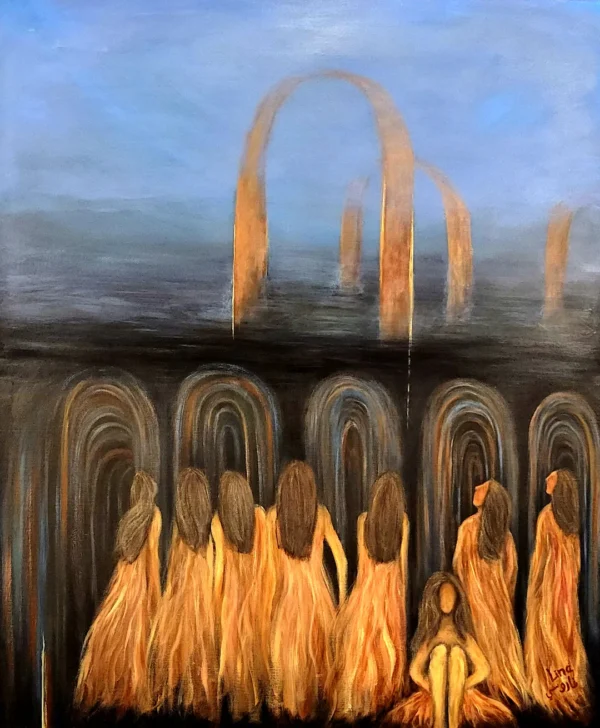
Have you ever had a feeling that words just couldn’t hold? A grief too heavy, a joy too bright, a change you’re still finding your way through? In my studio, that’s exactly where painting begins.
Expressive painting isn’t about copying what something looks like. It’s about showing what something feels like. And the beautiful secret is this: you don’t need any experience to start. You only need a feeling – and a few colours.
I wrote about why expressing feelings through art heals us in Express Your Feelings and Heal with Art – this post is the practical companion: how to actually do it, brush in hand.
Why acrylic paint is perfect for painting emotions
Acrylic is the most forgiving paint I know, which makes it ideal for beginners and for emotional work.
- It dries fast, so you can layer colour over colour the moment a new feeling arrives – no waiting, no losing the mood.
- It welcomes mistakes. Don’t like a passage? Paint over it. In expressive painting, the layers underneath become part of the story.
- It loves texture. You can apply it thin like watercolour or thick with a palette knife, and mix in fabric, paper, even sand — all things I use in my own paintings.
5 simple techniques to paint what you feel
- Choose the feeling before the subject. Don’t start with “I’ll paint a tree.” Start with “I’ll paint the week I decided to begin again.” Give the feeling a name, then let the painting follow it.
- Let colour lead. Colour speaks before any image does. Ask yourself: what colour is your calm? Your courage? Your sadness? There are no wrong answers – warm golds and reds often carry energy and warmth, deep blues and greys can hold quiet or heaviness. Your personal colour meanings matter more than any rule.
- Paint with your whole arm. Small, careful strokes make small, careful feelings. Use a big brush, a palette knife, a sponge, even your fingers. Fast, sweeping marks carry excitement; slow, heavy strokes carry weight. Let your body tell the truth.
- Layer – then scrape back. Paint a layer, let it dry, paint over it, then scrape or scratch through while the top is still wet. What shows through is like memory: the past visible inside the present. Some of the most honest moments in my work come from what I removed, not what I added.
- Add something real. Glue down a scrap of fabric, a piece of Japanese paper, a few grains of sand. Mixed media gives a feeling something physical to hold onto – and it frees beginners from the pressure of “pure painting.”
Try this today: a 15-minute feelings painting
- Pick one feeling from this week. Set a timer for 15 minutes.
- Choose three colours that feel like it, plus white and black.
- Cover the whole canvas quickly – no drawing first, no sketch.
- Halfway through, change tools: if you used a brush, switch to a palette knife or your fingers.
- Stop when the timer ends. Step back and ask: “Does it feel true?” – not “Is it good?”
That’s it. You’ve painted a feeling.
“But I can’t draw” – and other fears
Almost every student who joins my workshops says one of these first: “I’m not creative.” You are. Creativity is just honesty with colour. “It has to look perfect.” In my own work I say the opposite: it should be perfectly imperfect – your own path, your own roads and gates. Perfection is not the goal; truth is. “Everyone else will be better than me.” My groups are small for a reason. Nobody is performing; everybody is exploring.
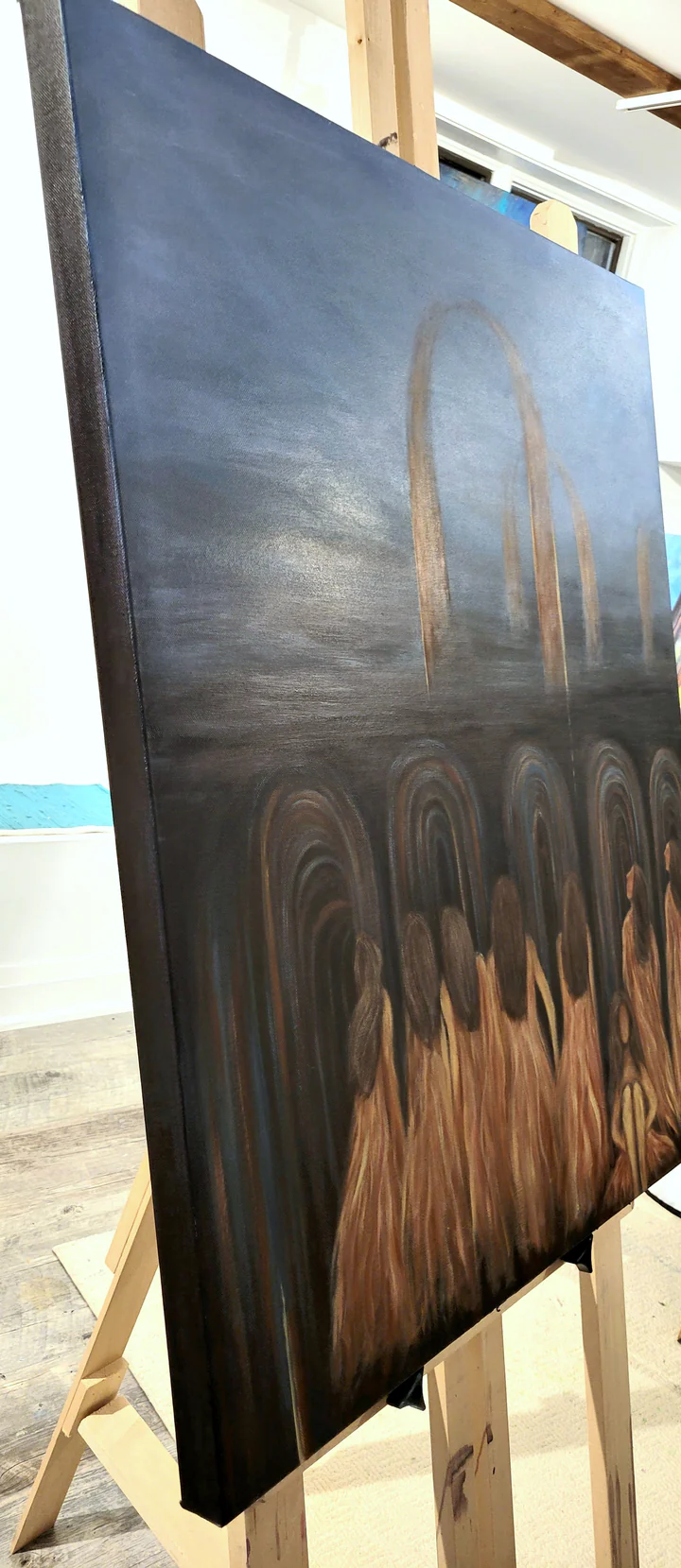
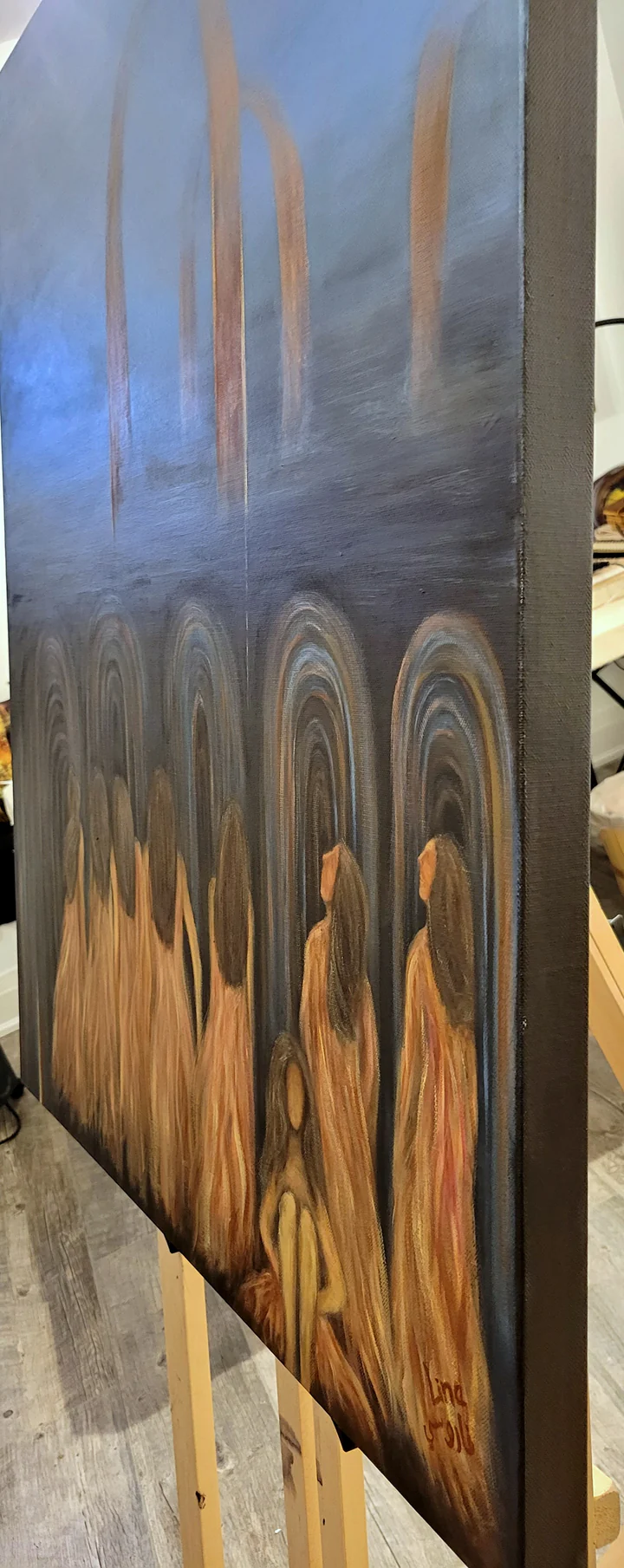
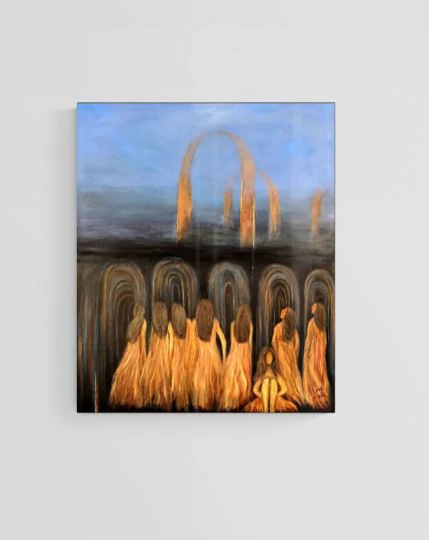
When I painted Dotted Line, from my Point of View series, I was thinking about exactly this – how the pieces of our lives connect, sometimes in ways we only see later. There’s something magical about connecting the dots. And there’s one small figure who sits apart from the others, still connecting hers. Many of us have been that figure. Painting is how we connect our own dots.
Learn to paint your feelings, with guidance
Reading is a start – but painting alongside a teacher changes everything. In my online group workshop, we spend four live Thursday sessions together on Zoom: I demonstrate expressive acrylic techniques step by step, you paint your own meaningful piece with personal feedback and recorded critiques along the way, in a small group of 6-8 people who are all there for the same reason. No experience is needed – just curiosity, and a feeling you’d like to put on canvas.
Online Group Workshop – CA$195 · 4 live sessions, Thursdays · small group (6–8).
See the next start date and save your spot
And if a painting on this page spoke to you, you can explore the Point of View series – original expressive paintings, each with its own story.
Frequently asked questions
- Do I need painting experience to express feelings with acrylics? – No. Expressive painting starts from emotion, not technique. The techniques in this guide – choosing a feeling first, letting colour lead, layering – can be learned by complete beginners, and they’re the foundation of my beginner-friendly online workshops.
- What materials do I need to start? – A small set of acrylic paints (a few colours plus black and white), two or three brushes in different sizes, a palette knife if you have one, canvas board or thick paper, a jar of water, and paper towels. That’s enough for your first feelings painting.
- When are Lina’s online art workshops? – The online group workshop runs on Thursdays, in a series of four live Zoom sessions with a small group of 6–8 students. You’ll find the next start date on the signup page.
